The Psychology of Quality and More
|
|
The Psychology of Quality and More |
Calculation detail for X-MR Control ChartsQuality Tools > Tools of the Trade > Calculation detail for X-MR Control Charts
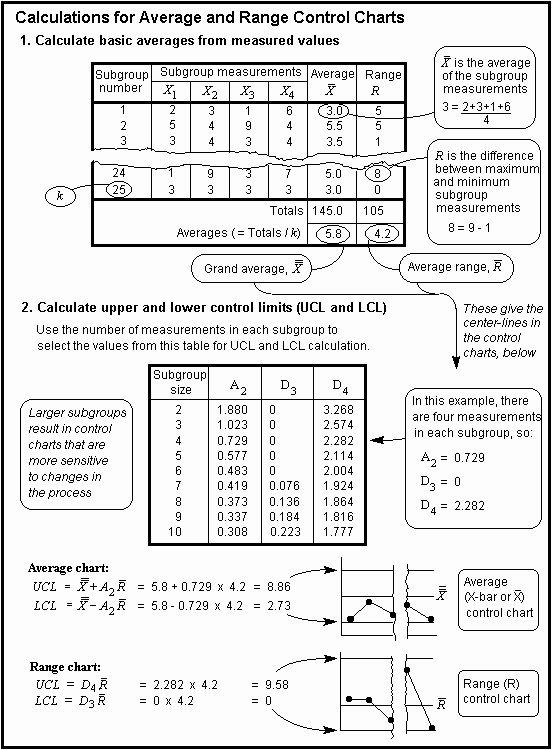
Control Charts, as described in previous articles, are used to detect statistically-significant variation in processes and hence enables variation and quality to be pro-actively controlled. There are seven types of control chart, each of which has a different calculation for the upper and lower control limits. This month, we are covering the calculations for variables charts.
Fig. 1. Calculating X/MR control limits
Next time: Calculation detail for X-bar/R Control Charts
This article first appeared in Quality World, the journal of the Chartered Quality Institute
|
Site Menu |
|
Quality: | Quality Toolbook | Tools of the Trade | Improvement Encyclopedia | Quality Articles | Being Creative | Being Persuasive | |
|
And: | C Style (Book) | Stories | Articles | Bookstore | My Photos | About | Contact | |
|
Settings: | Computer layout | Mobile layout | Small font | Medium font | Large font | Translate | |
You can buy books here |
|
And the big |