The Psychology of Quality and More
|
|
The Psychology of Quality and More |
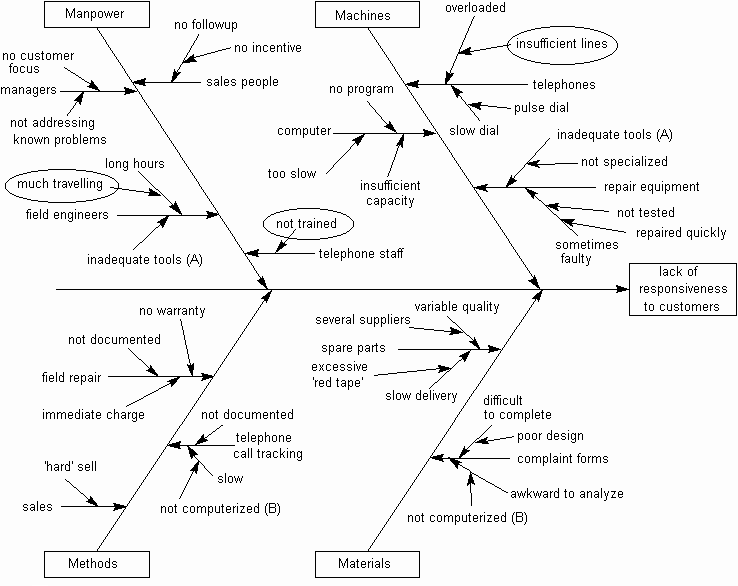
Cause-Effect DiagramAlso known as an Ishikawa Diagram (after its originator, Kaoru Ishikawa, who first used them in Kobe Shipyards in the 1940s). It is also more popularly known as the Fishbone Diagram.In essence, it is simply a tree or hierarchy, showing how causes have causes have causes. The fishbone shape is due to angling of lines so text can more easily be fitted in. Its main use is to discover potential causes of unwanted problems. It also can be used more flexibly for such as discovering how to cause solutions. The main 'bones' of the fishbone diagram typically are the 'four Ms' as below. Sometimes two more Ms are added: 'Mother Nature' (the environment) and 'Measurements'. The four Ms are also sometimes changed to the four Ps: People (manpower), Process (methods), Plant (machines) and Products (materials).
See also:Toolbook chapter: Cause-Effect Diagram |
Site Menu |
|
Quality: | Quality Toolbook | Tools of the Trade | Improvement Encyclopedia | Quality Articles | Being Creative | Being Persuasive | |
|
And: | C Style (Book) | Stories | Articles | Bookstore | My Photos | About | Contact | |
|
Settings: | Computer layout | Mobile layout | Small font | Medium font | Large font | Translate | |
You can buy books here |
|
And the big |